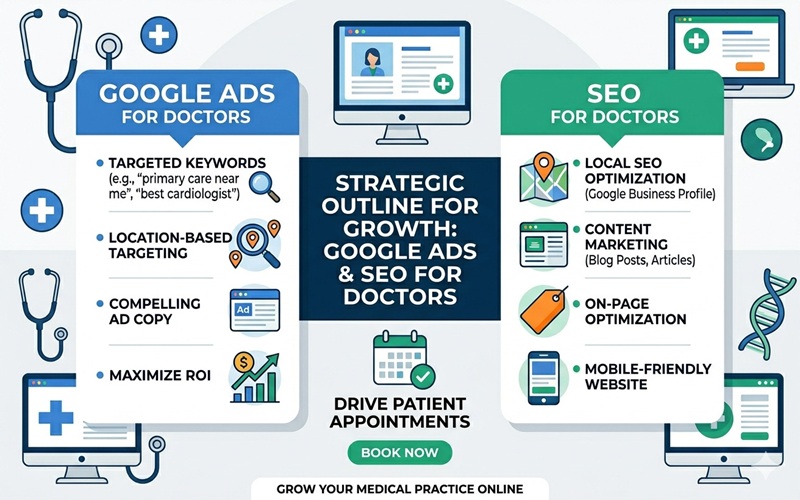
Ultimate Google Ads for Doctors SEO Outline to Boost Clinic Growth
In today’s digital age, healthcare marketing has shifted dramatically from traditional methods to online platforms. Patients now rely heavily on search engines to find doctors, clinics, and specialized treatments. This makes having a strong online presence essential for medical professionals who want to stay competitive and grow their practice.
One of the most effective ways to achieve instant visibility is through paid advertising. A well-structured google ads for doctors SEO outline can help doctors reach potential patients at the exact moment they are searching for medical services. Unlike organic strategies that take time, Google Ads delivers immediate results when executed properly.
In this guide, you’ll learn how to create, optimize, and manage Google Ads campaigns specifically tailored for doctors. From keyword research to targeting the right audience, this article covers everything needed to build a successful advertising strategy.
Why Doctors Need Google Ads
The healthcare industry is becoming increasingly competitive, with more clinics and specialists entering the market every day. Patients are no longer relying solely on referrals they are actively searching online for healthcare providers, reading reviews, and comparing options before making a decision.
Google Ads offers doctors a powerful way to stand out in this crowded space. One of its biggest advantages is instant visibility. Your clinic can appear at the top of search results when potential patients are actively looking for services you offer. This ensures you don’t miss valuable opportunities.
Another key benefit is targeted reach. You can focus on specific locations, services, and even patient demographics. This means your ads are shown only to the people most likely to need your expertise.
Additionally, Google Ads provides measurable results. You can track clicks, conversions, and return on investment (ROI), allowing you to refine your campaigns over time. Using a structured google ads for doctors SEO outline ensures your campaigns are organized and optimized for maximum effectiveness.
Understanding Google Ads Basics for Healthcare
Google Ads is an online advertising platform that allows businesses, including healthcare providers, to display ads on search engine results pages and across the web. For doctors, it serves as a direct channel to connect with patients searching for medical services.
There are several types of ads that doctors can use. Search Ads appear when users type queries like “dermatologist near me.” Display Ads show visual banners on websites, helping build awareness. Local Ads are particularly useful for clinics, as they highlight your location and contact details to nearby users.
Healthcare advertising is different from other industries due to strict policies and regulations. Ads must comply with guidelines related to medical claims, patient privacy, and ethical standards. Misleading or exaggerated claims can lead to disapproval.
Understanding these basics is essential before launching any campaign. A solid foundation ensures your ads not only perform well but also comply with industry standards, protecting your reputation and credibility.
Keyword Research for Doctors
Keyword research is the backbone of any successful Google Ads campaign. Choosing the right keywords ensures your ads appear when potential patients are actively searching for your services.
Doctors should focus on two main types of keywords. Local keywords, such as “dentist near me” or “cardiologist in Multan,” help attract nearby patients. Service-specific keywords, like “teeth whitening” or “skin allergy treatment,” target users looking for specific treatments.
There are several tools available to identify high-performing keywords, including Google Keyword Planner and other SEO platforms. These tools help you understand search volume, competition, and cost-per-click, allowing you to make informed decisions.
Incorporating a google ads for doctors SEO outline into your keyword strategy helps organize keywords into relevant groups. This structure improves ad relevance, increases click-through rates, and ultimately leads to better conversions.
Creating a High-Converting Google Ads Campaign
A successful campaign requires a clear and organized structure. Google Ads campaigns typically follow a hierarchy:
Campaign → Ad Groups → Keywords → Ads
Each level plays a crucial role in ensuring your ads are relevant and effective.
Ad copy is another critical element. Your headlines should grab attention and include relevant keywords. Descriptions should clearly explain your services and highlight what sets your practice apart. A strong call-to-action, such as “Book an Appointment Today,” encourages users to take the next step.
Equally important is your landing page. When users click on your ad, they should be directed to a page that is fast-loading, mobile-friendly, and easy to navigate. Clear contact options, such as phone numbers and appointment forms, make it simple for patients to reach you.
Using a google ads for doctors SEO outline helps streamline the entire process. It ensures that every component—from keywords to landing pages—is aligned and optimized for conversions. This structured approach minimizes wasted ad spend and maximizes results.
Targeting the Right Audience
Effective targeting is essential for maximizing the success of your Google Ads campaigns. Doctors must ensure their ads are shown to the right audience at the right time.
Location targeting allows you to focus on specific cities or regions, ensuring your ads reach patients in your service area. This is especially important for clinics that rely on local traffic. Demographic targeting enables you to refine your audience based on age, gender, or other relevant factors.
Device targeting is another key consideration. Many patients search for healthcare services on their smartphones, so optimizing for mobile users is crucial. Additionally, scheduling your ads during peak hours—when patients are most likely to search—can significantly improve performance.
Precision in targeting not only improves your campaign’s effectiveness but also reduces unnecessary costs. By focusing on the right audience, doctors can attract more qualified leads and increase appointment bookings.
Budgeting and Bidding Strategy
Setting the right budget is crucial for running a successful Google Ads campaign. Doctors should start with a realistic daily or monthly budget based on their clinic size, services, and competition in their area. It’s important not to overspend initially but to test and adjust campaigns as data becomes available.
Cost-per-click (CPC) plays a major role in determining how much you’ll pay for each visitor. Competitive keywords like “best surgeon near me” may cost more, while niche services can be more affordable. Understanding CPC helps you allocate your budget wisely.
Google Ads also offers smart bidding strategies such as Maximize Conversions or Target CPA (Cost Per Acquisition). These automated options use data to optimize bids and improve results over time.
The key to success is balancing cost with performance. By monitoring spending and refining your approach, doctors can maximize ROI while minimizing wasted ad spend.
Tracking and Measuring Performance
Tracking performance is essential to understand whether your Google Ads campaigns are delivering results. Without proper analytics, it’s impossible to know what’s working and what needs improvement.
Doctors should focus on key metrics such as click-through rate (CTR), which shows how often users click on your ads, and conversion rate, which measures how many clicks turn into appointments or inquiries. Another important metric is cost per conversion, helping you evaluate the efficiency of your spending.
Using tools like Google Analytics and conversion tracking allows you to monitor user behavior after they click on your ad. You can see which keywords and ads generate the most leads and adjust your strategy accordingly.
A well-structured google ads for doctors SEO outline provides a framework for continuous optimization. By analyzing data and making informed changes, doctors can improve campaign performance and achieve better long-term results.
Common Mistakes Doctors Should Avoid
Many doctors make avoidable mistakes when running Google Ads campaigns. One of the most common issues is poor keyword selection, which can lead to irrelevant traffic and wasted budget. Choosing broad or unrelated keywords often reduces campaign effectiveness.
Another mistake is ignoring mobile users. Since most patients search on their phones, failing to optimize ads and landing pages for mobile can result in lost opportunities. Similarly, not tracking conversions makes it difficult to measure success or improve campaigns.
Weak landing pages also hurt performance. If users click your ad but don’t find clear information or contact options, they are likely to leave without taking action.
Avoiding these mistakes can significantly improve your campaign results and ensure better use of your advertising budget.
Role of SEO Alongside Google Ads
While Google Ads provides immediate results, search engine optimization (SEO) focuses on long-term growth. Both strategies are essential for building a strong online presence in the healthcare industry.
Google Ads helps doctors appear at the top of search results instantly, while SEO works to improve organic rankings over time. Combining both allows you to dominate search results and attract more patients.
For example, a clinic can use ads to generate quick leads while simultaneously building SEO content such as blogs and service pages. This dual strategy ensures consistent traffic and better visibility.
Many digital marketing experts, including seowithquyoom, emphasize the importance of integrating SEO with paid advertising. Together, they create a comprehensive strategy that drives both short-term and long-term success.
Conclusion
In today’s competitive healthcare landscape, having a strong online marketing strategy is no longer optional—it’s essential. Google Ads offers doctors a powerful way to reach potential patients quickly and effectively.
By following a structured approach, from keyword research to campaign optimization, doctors can create high-performing ads that drive real results. Using a clear strategy ensures better targeting, improved conversions, and efficient use of budget.
A well-planned google ads for doctors SEO outline helps organize every aspect of your campaign, making it easier to manage and optimize over time. When combined with SEO efforts, it creates a complete digital marketing system that supports long-term growth.
Investing in the right strategies today can help doctors attract more patients, build trust, and grow their practice in an increasingly digital world.
Frequently Asked Questions (FAQs)
What is the benefit of using Google Ads for doctors?
Google Ads helps doctors gain instant visibility on search engines, allowing them to reach patients who are actively looking for medical services. It provides targeted advertising, measurable results, and faster patient acquisition compared to organic methods.
How much should doctors spend on Google Ads?
The budget depends on factors like location, competition, and medical specialty. Doctors can start with a small daily budget, test campaign performance, and gradually increase spending based on results and return on investment (ROI).
How does a google ads for doctors SEO outline improve campaign performance?
A google ads for doctors SEO outline helps organize campaigns by structuring keywords, ad groups, and landing pages effectively. This improves ad relevance, increases click-through rates, and leads to higher conversion rates.
Can Google Ads work together with SEO for doctors?
Yes, combining Google Ads with SEO is highly effective. Google Ads delivers immediate traffic, while SEO builds long-term visibility. Together, they create a balanced strategy that helps doctors attract more patients and grow their online presence consistently.